


- Home
- Caesarean Delivery in Loni Kalbhor
Caesarean Delivery in Loni Kalbhor
A caesarean delivery is a safe and well-established way to bring your baby into the world when it’s the right choice for you and your baby. At Bloom Hospital, every caesarean delivery is guided by Dr. Tejal Borate (Baravkar), with the same attentiveness and continuity of care you’ve had throughout your pregnancy.
Safe, Individualized C-Section Delivery in Loni Kalbhor
A Caesarean delivery is a surgical method of childbirth in which the baby is delivered through an incision in the mother’s abdomen and uterus.
A C-section may be:
- Planned (elective): When a Caesarean is recommended before labour because of known pregnancy or maternal factors.
- Unplanned or emergency: When a concern develops during pregnancy or labour and a Caesarean becomes necessary.
A Caesarean is not automatically required simply because a pregnancy is considered high risk. The mode of delivery depends on the specific circumstances of each pregnancy.
At Bloom Hospital, Loni Kalbhor, maternity care includes pregnancy monitoring, high-risk pregnancy care, labour and delivery facilities, and maternal and neonatal support. The hospital has 2 operation theatres, 1 labour room, 4 delivery suites, 4 recovery rooms, and 10 inpatient beds.
Quick Answer
A caesarean delivery (C-section) is the surgical delivery of a baby through an incision in the mother’s abdomen and uterus. At Bloom Hospital, it’s performed by Dr. Tejal Borate (Baravkar), whether planned in advance or required during labour, with dedicated pre-surgical, surgical, and postnatal care.
What Happens During a Caesarean Delivery?
A Caesarean delivery follows several carefully coordinated steps, beginning with preparation before surgery and continuing through recovery after the baby is delivered.
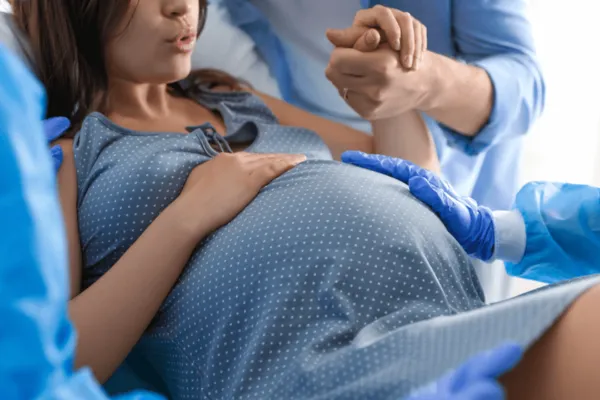
Before the Surgery
The mother is assessed before the procedure, and the medical team reviews the pregnancy, reason for Caesarean delivery and any relevant medical conditions.
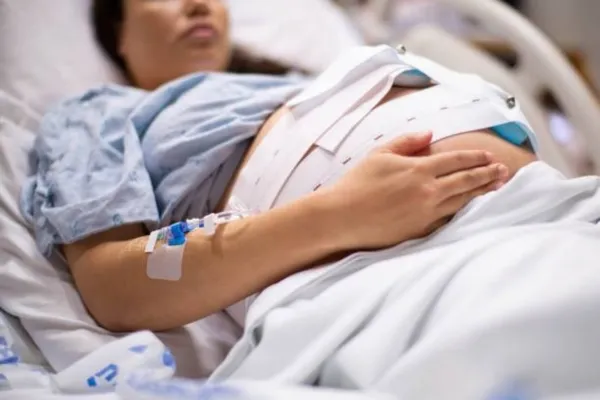
During the C-Section
The exact approach for C Section can vary depending on whether the Caesarean is planned or performed urgently and whether additional complications are present.
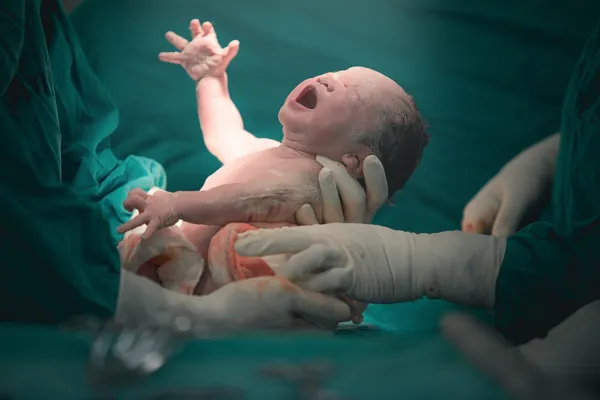
After the Baby Is Born
The newborn is assessed by the medical team. When medically appropriate, early contact between mother and baby and breastfeeding can be supported.
When Caesarean Delivery Recommended?
A C-section can be recommended for several maternal, fetal or pregnancy-related reasons. While, A Caesarean delivery is not recommended for the same reason in every patient. An Experienced obstetrician considers the complete clinical picture before deciding the mode of delivery.
- Baby-Related Reasons
- Baby is in a breech or transverse position
- Concerning changes in the baby’s heart rate
- Certain conditions affecting fetal wellbeing
- Certain situations involving the umbilical cord
- Pregnancy or Placenta-Related Reasons
- Placenta previa or other placental complications
- Certain pregnancy complications requiring planned delivery
- Some cases of multiple pregnancy depending on the clinical situation
- Labour-Related Reasons
- Labour is not progressing despite appropriate management
- Vaginal delivery becomes unsafe during labour
- A complication develops that requires prompt delivery
- Maternal Reasons
- Certain maternal medical conditions
- Previous uterine surgery
- Previous Caesarean delivery in circumstances where repeat C-section is recommended
- Other obstetric factors identified during pregnancy
Diagnostic & Monitoring Facilities for Caesarean Delivery
Pregnancy scans may be performed to monitor fetal growth, development, position and other clinically relevant findings.
Used when required to assess blood flow and fetal well-being during pregnancy.
Helps monitor the baby’s heart rate and response to movements when clinically indicated.
Laboratory investigations may be required at different stages of pregnancy and are provided subject to the availability of the specific test.
Recommended pregnancy vaccinations can be provided according to the obstetrician’s advice and service availability.
Prescribed medicines and pregnancy-related medications can be accessed through the hospital pharmacy
What Happens During a C-Section
- Step 1
Pre-Surgical Preparation
Before the procedure, your vitals are checked, an IV line is placed, and anaesthesia (usually spinal, so you remain awake) is administered to numb the lower half of your body.
- Step 2
Positioning and Sterile Setup
You're positioned on the operating table and the abdominal area is cleaned and draped to maintain a sterile environment throughout the procedure.
- Step 3
Abdominal and Uterine Incision
A horizontal incision is made low on the abdomen, followed by a second incision in the uterus, through which your baby will be delivered.
- Step 4
Delivery of the Baby
The baby is gently delivered through the incisions, the umbilical cord is clamped and cut, and your baby is handed over for initial newborn checks.
- Step 5
Placenta Removal and Closure
The placenta is removed, and the uterus and abdominal layers are carefully stitched closed in stages.
- Step 6
Post-Surgical Monitoring
Patient moved to a recovery area where your vitals, bleeding, and pain levels are closely monitored before you're shifted to your room.
Recovery After a Caesarean Delivery
| Recovery Phase | What to Expect |
|---|---|
| First 24 hours | Close monitoring, pain management, gradual mobility |
| Days 2–4 | Increasing mobility, wound care guidance, breastfeeding support |
| Week 1–2 | Continued rest, gradual return to light activity |
| Week 6 | Follow-up check-up to assess healing |
Full recovery after a caesarean delivery generally takes longer than a normal delivery, and activity levels should be increased gradually under your doctor’s guidance.
Is a C-Section Painful?
During a Caesarean delivery, anaesthesia is used so that the mother does not feel the surgical pain of the procedure.
With regional anaesthesia, some women may experience sensations such as pressure, pulling or movement during surgery.
Discomfort is more commonly experienced during the recovery period as the anaesthesia wears off and the surgical incision begins to heal.
Pain-management options are discussed according to the mother’s medical condition and the clinical situation.
Breastfeeding After a C-Section
A Caesarean delivery does not prevent breastfeeding.
However, abdominal tenderness may make certain breastfeeding positions uncomfortable during the first few days. Support with positioning and attachment can make breastfeeding more comfortable while protecting the healing incision.
Mothers may also need guidance regarding:
- Baby positioning
- Correct latch
- Feeding frequency
- Breast discomfort
- Milk supply concerns
- Feeding after surgery
Normal Delivery vs Caesarean Delivery
The choice between normal and Caesarean delivery should be based on the clinical circumstances of each pregnancy.
| Normal Delivery | Caesarean Delivery |
|---|---|
| Baby is delivered through the vagina | Baby is delivered through an abdominal surgical procedure |
| Labour occurs naturally or with medical support | Delivery is performed surgically |
| Recovery is generally different from surgical recovery | Requires recovery from abdominal surgery |
| Appropriate when vaginal birth is clinically suitable | Recommended when vaginal delivery is not appropriate or becomes unsafe |
When Should You Seek Medical Help After a C-Section?

Some bleeding, discomfort and tiredness are expected after delivery. However, certain symptoms should not be ignored like:
- Heavy or increasing vaginal bleeding
- Fever or chills
- Increasing abdominal pain
- Increasing pain around the incision
- Redness, swelling or discharge from the wound
- The incision opening
- Foul-smelling vaginal discharge
- Severe headache or changes in vision
- Chest pain or difficulty breathing
- Severe pain or swelling in one leg
- Fainting or significant weakness
If symptoms are severe or sudden, seek urgent medical attention.
Dr. Tejal Borate (Baravkar)
Founder – Bloom Multispeciality Hospital
MBBS, DNB (Obstetrics & Gynaecology) | 10 Years of Experience
Registration No. – MH/2018051760
Dr. Tejal Borate (Baravkar) is an experienced Obstetrician and Gynecologist dedicated to providing comprehensive care for women at every stage of life. With 10 years of experience in Obstetrics & Gynecology, she focuses on providing personalized care with compassion, clinical expertise, and attention to each patient’s individual needs.
High Risk Pregnancy
Advanced Laparoscopy Surgery
Infertility Treatment
PMOS & Hormonal Management

Why Choose Bloom Hospital for
Caesarean Delivery in Loni Kalbhor Pune
A Caesarean delivery requires more than an operating theatre. Care involves pregnancy assessment before delivery, surgical support during the procedure, newborn care and monitoring during recovery. Bloom Hospital provides:
- Dedicated operation theatres
- Labour and delivery facilities
- Recovery rooms
- Pregnancy ultrasound and monitoring
- Fetal Doppler and NST
- High-risk pregnancy monitoring
- Neonatal resuscitation equipment
- Maternal and neonatal support
Caesarean Delivery Care for Families in Loni Kalbhor & Pune
Bloom Hospital is located on Pune-Solapur Road in Loni Kalbhor, making it a maternity care option for families seeking obstetric and delivery services in the area such as:
- Uruli Kanchan
- Kharadi
- Manjari
- Fursungi
- Hadapsar
- Loni kalbhor
- Shewalwadi
We’re Here When You Need Us
Location
- 3rd Floor, Balkrishna Heirtage, Pune-Solapur Highway, Opposite HP Terminal, Loni Kalbhor, Pune
Phone
- +91-9022919976
Clinic Hours
- Monday to Sunday - 09.00 AM to 09.00 PM
- Emergency - 24/7 Available
Frequently Asked Questions
What is a Caesarean delivery?
A Caesarean delivery is a surgical method of childbirth in which the baby is delivered through an incision made in the mother’s abdomen and uterus.
When is a C-section recommended?
A C-section may be recommended when vaginal delivery is not considered appropriate because of factors involving the mother, baby, placenta, pregnancy or progress of labour.
Is a Caesarean delivery always planned?
No. Some C-sections are planned before labour, while others become necessary during pregnancy or labour because of a developing medical concern.
Will patient be awake during a C-section?
In many Caesarean deliveries, regional anaesthesia allows the mother to remain awake during the procedure. The type of anaesthesia depends on the individual clinical situation.
How long does recovery take after a C-section?
Recovery varies between women. Because a C-section involves abdominal surgery, recovery generally takes longer than recovery from an uncomplicated vaginal birth.
Can you breastfeed after a Caesarean delivery?
Yes. Most mothers can breastfeed after a C-section. Additional support with positioning and attachment may be useful during the early recovery period.
Can I have a normal delivery after a C-section?
Some women may be candidates for VBAC. Eligibility depends on the previous C-section, current pregnancy and other clinical factors.