


- Home
- Ovulation Study in Loni Kalbhor
Ovulation Study in Loni Kalbhor
Ovulation monitoring can be particularly useful for women with irregular ovulation, PCOS, unexplained difficulty conceiving, or those undergoing ovulation induction or IUI treatment.
What Is an Ovulation Study?
An ovulation study is a series of assessments performed during a menstrual cycle to observe follicular development and ovulation.
The most commonly used method is transvaginal ultrasound.
The ultrasound allows the doctor to observe:
- Development of ovarian follicles
- Growth of the dominant follicle
- Endometrial lining
- Changes in the follicle as ovulation approaches
- Whether the follicle has released the egg
- Other ovarian or pelvic findings that may affect fertility
Unlike a single ultrasound, follicular monitoring involves looking at changes over time. This gives the doctor a better picture of what is happening during that particular menstrual cycle.
Quick Answer - Why Is an Ovulation Study Done?
An ovulation study may be recommended when the doctor needs to understand whether and when ovulation is occurring.
It can be useful for:
- Irregular menstrual cycles
- Suspected ovulation problems
- PCOS
- Difficulty conceiving
- Ovulation induction treatment
- Timed intercourse
- IUI treatment
- Determining the appropriate timing for a fertility procedure
What Happens During Ovulation?
To understand an ovulation study, it helps to understand what normally happens inside the ovary. At the beginning of the menstrual cycle, several small follicles may be visible in the ovary. Usually, one follicle becomes dominant and continues to grow.
As it develops: Small follicle → Dominant follicle → Follicle matures → Ovulation → Egg is released
After ovulation, the ruptured follicle changes into a structure called the corpus luteum, which produces progesterone during the second half of the menstrual cycle. An ovulation study follows these changes using ultrasound.
What Does the Doctor Look For During Follicle Tracking
Follicle tracking is not simply about measuring the follicle. The doctor considers several findings together.
- Follicular Growth
The ultrasound tracks how the developing follicle changes during the cycle.
- Dominant Follicle
The doctor looks for the follicle that appears to be progressing toward ovulation.
- Endometrial Lining
The uterine lining is also assessed because the endometrium needs to be appropriately developed for implantation.
- Evidence of Ovulation
Later ultrasound findings may provide evidence that the follicle has ruptured and ovulation has occurred.
- Ovarian and Pelvic Findings
The scan may also identify ovarian cysts or other pelvic abnormalities that could influence the treatment plan.
How Is an Ovulation Study Performed?
The study is usually performed using a transvaginal ultrasound. A covered ultrasound probe is gently inserted into the vagina to obtain detailed images of the uterus and ovaries.
The procedure generally involves: Patient preparation → Transvaginal ultrasound → Follicle measurement → Endometrial assessment → Repeat scan → Assessment of ovulation
The number of scans and their timing depend on:
- Menstrual cycle length
- Follicle development
- Whether medicines are being used
- Previous response to treatment
- The purpose of the monitoring
When Does Follicular Monitoring Start?
The starting day depends on the woman’s menstrual cycle and the reason for monitoring. In a natural cycle, the first ultrasound may be scheduled early in the cycle to assess the ovaries and establish a baseline.
Further scans are then planned according to follicular development. If ovulation-induction medicines are being used, monitoring may follow a specific treatment protocol.
What Happens During Each Scan?
The findings can change from one scan to the next.
Early-Cycle Scan
The doctor may assess:
- Ovaries
- Small follicles
- Endometrial lining
- Presence of an ovarian cyst
- Baseline pelvic findings
Developing Follicle Scan
The doctor follows the follicle that is becoming dominant and assesses its growth.
Pre-Ovulation Scan
As the follicle approaches maturity, the scan helps determine whether ovulation may be approaching.
This can be particularly useful when timing intercourse, IUI or an ovulation trigger.
Post-Ovulation Assessment
A later scan may show changes suggesting that the follicle has ruptured and ovulation has occurred.
What Happens During Each Scan?
The findings can change from one scan to the next.
Early-Cycle Scan
The doctor may assess:
- Ovaries
- Small follicles
- Endometrial lining
- Presence of an ovarian cyst
- Baseline pelvic findings
Developing Follicle Scan
The doctor follows the follicle that is becoming dominant and assesses its growth.
Pre-Ovulation Scan
As the follicle approaches maturity, the scan helps determine whether ovulation may be approaching.
This can be particularly useful when timing intercourse, IUI or an ovulation trigger.
Post-Ovulation Assessment
A later scan may show changes suggesting that the follicle has ruptured and ovulation has occurred.
Who Benefits From an Ovulation Study?
Follicular monitoring may be considered for women with:

Irregular Periods
The doctor uses ovulation assessment to understand the cycle pattern and determine whether treatment is needed.
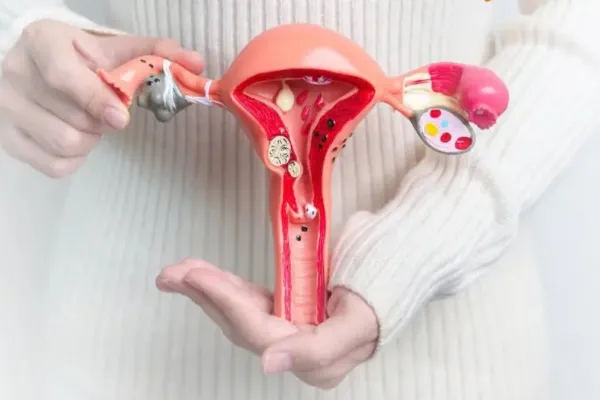
PCOS
Ovulation monitoring may be useful when treatment is being used to help induce ovulation.
Difficulty Conceiving
If pregnancy has not occurred, assessing ovulation can be one component of a broader fertility evaluation.
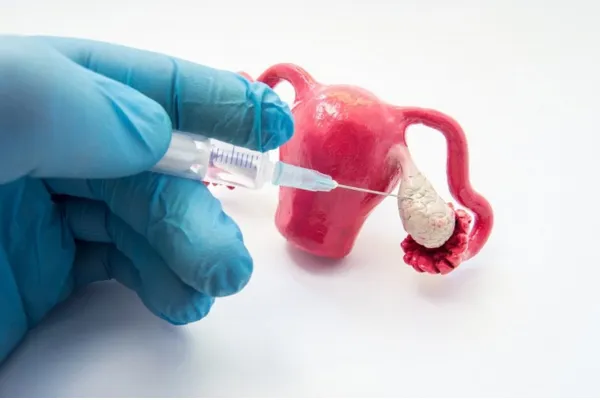
Ovulation Induction
When medication is used to stimulate ovulation, ultrasound monitoring helps assess the ovarian response.
Ovulation Study and IUI
IUI involves placing prepared sperm inside the uterus around the time of ovulation. Timing is very important factor. Follicular monitoring can help the doctor determine whether a follicle is developing appropriately and when ovulation is expected.
Depending on the treatment protocol, an ovulation trigger may be used and IUI scheduled accordingly.
The exact timing is individualized according to follicular development and the treatment plan.
Is an Ovulation Study Painful?
A transvaginal ultrasound may cause some pressure or temporary discomfort, but most women tolerate the examination well.
The experience can vary depending on:
- Individual sensitivity
- Pelvic tenderness
- Endometriosis
- Vaginal or pelvic conditions
- Anxiety about the procedure
Tell the healthcare professional if the examination is uncomfortable so that it can be performed as gently as possible.
When Should You Consider an Ovulation Evaluation?

You may benefit from discussing ovulation assessment with a gynecologist if you have:
- Irregular periods
- Very long or very short cycles
- Missed periods
- PCOS
- Difficulty conceiving
- Suspected anovulation
- Previous cycles where ovulation medicines were unsuccessful
- Planned IUI
- Ovulation-induction treatment
- Uncertainty about when you ovulate
Dr. Tejal recommends earlier fertility evaluation when conditions associated with infertility are already known, including irregular menstrual cycles.
Dr. Tejal Borate (Baravkar)
Founder – Bloom Multispeciality Hospital
MBBS, DNB (Obstetrics & Gynaecology) | 10 Years of Experience
Registration No. – MH/2018051760
Dr. Tejal Borate (Baravkar) is an experienced Obstetrician and Gynecologist dedicated to providing comprehensive care for women at every stage of life. With 10 years of experience in Obstetrics & Gynecology, she focuses on providing personalized care with compassion, clinical expertise, and attention to each patient’s individual needs.
High Risk Pregnancy
Advanced Laparoscopy Surgery
Infertility Treatment
PMOS & Hormonal Management

Ovulation Study at Bloom Hospital
Bloom Hospital provides ovulation study because it is important for infertility treatment, along with IUI, IVF and recurrent pregnancy loss care. The hospital also provides ultrasound services that can support fertility evaluation and follicular monitoring.
An ovulation study can be particularly useful when the doctor needs to understand the relationship between your menstrual cycle, follicular development and fertility treatment. The next step depends on what the monitoring shows.
Ovulation Study in Loni Kalbhor & Pune
If you are searching for an ovulation study in Loni Kalbhor, Bloom Hospital provides follicular monitoring as part of its infertility and gynecological services.
Located on Pune-Solapur Road in Loni Kalbhor, Bloom Hospital provides fertility-related services including ovulation study, IUI and IVF.
Whether you have irregular periods, PCOS or are undergoing fertility treatment, the purpose of ovulation monitoring is to understand what is happening during your cycle and use that information to guide the next step.
- Uruli Kanchan
- Kharadi
- Manjari
- Fursungi
- Hadapsar
- Loni kalbhor
- Shewalwadi
We’re Here When You Need Us
Location
- 3rd Floor, Balkrishna Heirtage, Pune-Solapur Highway, Opposite HP Terminal, Loni Kalbhor, Pune
Phone
- +91-9022919976
Clinic Hours
- Monday to Sunday - 09.00 AM to 09.00 PM
- Emergency - 24/7 Available
Frequently Asked Questions
Is an ovulation study the same as follicular monitoring?
Yes. The terms are commonly used interchangeably when ultrasound is being used to follow follicle development during a menstrual cycle.
Why is follicle tracking done?
It is done to monitor ovulation, assess response to ovulation medicines, identify the timing of ovulation, or help plan timed intercourse or IUI.
How many scans are needed for an ovulation study?
The number of scans depends on cycle length, follicular development, whether medication is being used and the purpose of monitoring.
When does follicular monitoring start?
The starting point varies according to the menstrual cycle and treatment protocol. Your doctor determines when the first and subsequent scans should be performed.
Does ovulation study confirm that you ovulated?
Ultrasound can provide evidence of follicular development and changes consistent with ovulation. Other methods, such as appropriately timed progesterone testing, may also be used when needed.
Can ovulation study detect PCOS?
Ultrasound may show ovarian features associated with PCOS, but an ovulation study alone does not diagnose PCOS. Diagnosis requires assessment of the overall clinical picture and appropriate diagnostic criteria.
Can follicular monitoring help with IUI?
Yes. Monitoring can help the fertility team assess follicular development and determine appropriate timing for IUI.
Can ovulation study help with natural pregnancy?
It helps to identify the timing of ovulation in selected women, which may assist with timed intercourse. However, it cannot guarantee pregnancy.